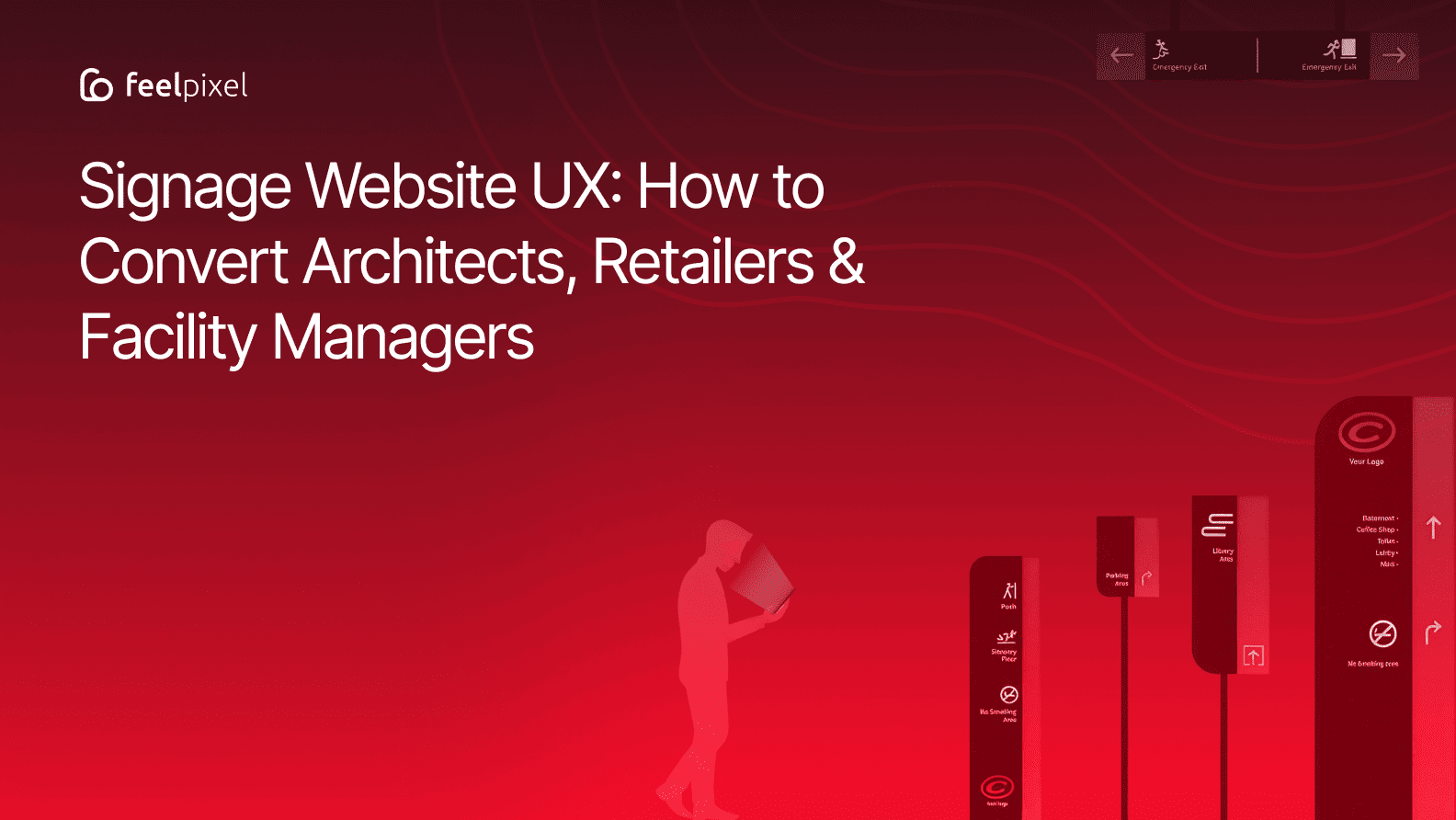
Learn how signage website UX design helps manufacturers convert architects, retailers, facility managers, and sign makers, with global strategies, and ROI data.
Why UX Matters for Signage Company Websites ?
The result: high bounce rates, low quote completions, and lost contracts to competitors with cleaner digital experiences.
The 3 Key User Types on a Signage Website (And What They Need)
| User Type | Primary Need | Biggest Frustration |
|---|---|---|
| Architects and designers | Specs, CAD files, 3D renders | Buried downloads, no project filters |
| Retailers and marketers | ROI proof, POS demos | Generic galleries, no sector context |
| Facility managers | Compliance docs, maintenance data | Poor hierarchy, endless scrolling |
1. Architects and Designers: Ending the Spec Hunt Nightmare
The pain
Architects work to tight deadlines and need precise specifications, material datasheets, CAD files, and 3D renders fast. On most signage websites, these are buried inside cluttered galleries with no filters for environment (indoor vs outdoor), material type, or application. Slow loading visuals compound the frustration.
- One click CAD and BIM file downloads, organised by project type (healthcare, aviation, retail, hospitality)
- Lightweight 3D renders with progressive loading so visuals appear quickly even on mobile
- Technical spec previews: LED brightness ratings, IP ratings for outdoor durability, fire resistance classifications
2. Retailers and Marketers:
The pain
Retail buyers are looking for POS displays, LED video walls, and in store promotional signage but they need to justify the investment internally. Generic product dumps with no sector specific ROI data, mobile unfriendly demos, and “contact us for pricing” messages push them straight to a competitor.
Key features we implement:
- Mobile first product demos with swipeable mockups showing shelf talkers and display units in actual retail environments
- Sector specific case study carousels with concrete metrics (“A regional supermarket chain recorded 28% higher impulse purchases after installing interactive end caps”)
Impact Benchmarks
| Features | Before | After | |
|---|---|---|---|
| Product demos | Static images | Product in environment context, videos and interactive 3D product | 40% longer sessions |
| Case studies | Buried PDF | Sector carousel with video and mockup images | 3× more case study views |
3. Facility Managers and Corporates:
Corporate facility managers and decision makers need wayfinding compliance documents, installation guides, warranty information, and maintenance schedules presented clearly. Most signage websites bury this information or do not have it at all, forcing managers to call or email for basic documentation that should be self serve.
We build compliance first sections with clean information hierarchy designed so the right documents surface immediately, without requiring a call to the sales team.
Result: When facility managers can find decision ready documentation without calling your sales team, trust increases and sales cycles shorten. Clients report 40% shorter procurement timelines when compliance information is self-serve and well structured.
Industry Specific UX: Healthcare, Aviation, and Hospitality
Healthcare:
Hospital project managers and procurement leads arrive knowing roughly what they need and are validating whether you can deliver it to their standard.
They are looking for modular sign systems that can be reconfigured as departments move, wayfinding totems for main entrances, overhead hanging blade signs for corridor junctions, room identification plates compatible with Braille and tactile standards, and directory boards updatable without specialist contractors. They want confirmation that surface finishes withstand repeated clinical grade cleaning and that your products have been installed in hospital environments before. A retail case study will not reassure them. They want to see a ward, a corridor, an atrium.
Retail:
Feelpixel in Action: The Cosign Project
FAQs
What is UX design for a signage website?
Why do architects leave signage websites without converting?
How does UX design improve signage quote conversion rates?
How should a signage website handle multiple markets and languages?
Conclusion
The global signage market is growing fast and becoming more competitive. The manufacturers who invest in UX now will own the digital credibility that drives deals for the next decade.