
Search is no longer just about ranking on Google. AI Overviews and generative search are changing how people discover businesses, products and information, while traditional organic clicks are also declining. Websites now need to be structured for both people and the systems that discover and interpret their content. At Feelpixel, we build search-ready websites from the ground up, combining keyword and search intent research, information architecture, content structure, UX and technical SEO. From crawlable pages, semantic HTML and structured data , including Article, FAQPage, BreadcrumbList and other schema types relevant to the page , to answer-focused content and LLM-friendly content structures, we design and develop websites that are easier to discover, understand and navigate across search and AI experiences.
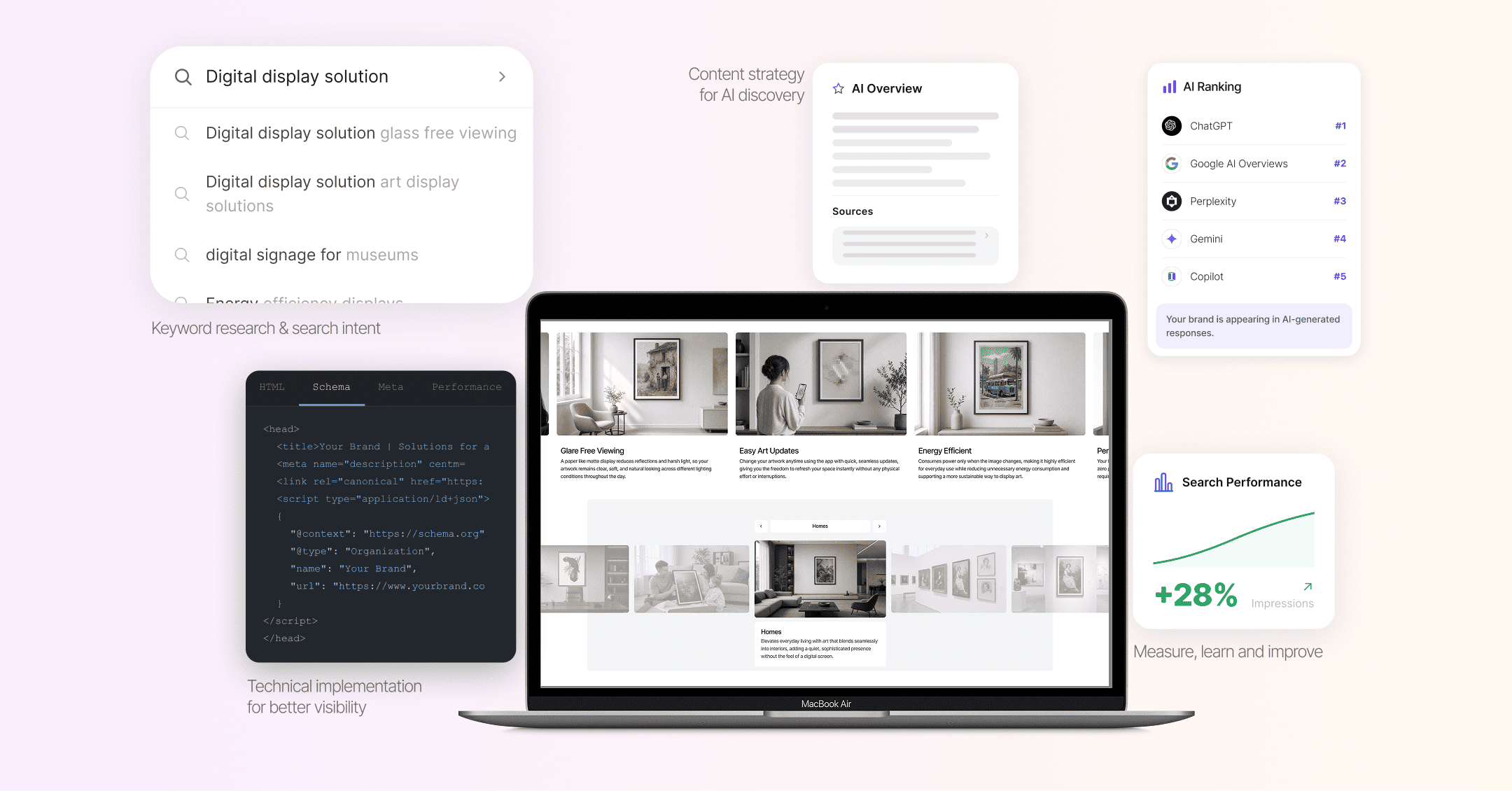
We treat SEO, AEO and GEO as overlapping layers of the same website strategy. Each influences how we structure content, design pages and develop the underlying experience, from search intent and crawlability to answer focused content, structured data and entity clarity.
01
We help the search engines find, crawl and index the right content.
02
We structure content so relevant questions can be clearly answered across answer engines and search experiences.
03
We help in generative search understand the business, its expertise and its relevance.
04
We help to optimise content so language models can understand the business, its expertise and the context behind its information.
Outcome: A clear connection between business goals, user needs and the search opportunities the website needs to address.
Outcome: A clear picture of where the website is discoverable today, how effectively its technical foundation, content, authority and entities support search and AI discovery, and where SEO, AEO and GEO improvements can strengthen visibility, understanding and representation across search experiences.
Outcome: A content and authority strategy designed to make the website easier to find, answer from and understand across traditional search and AI based discovery.
Outcome: A website where SEO, AEO and GEO considerations are built into the information architecture, content and technical implementation rather than added after launch.
Outcome: A website where SEO, AEO and GEO considerations are built into the information architecture, content and technical implementation rather than added after launch.
Outcome: An ongoing cycle of search, content, technical and AI visibility improvements based on real performance data rather than a one time SEO setup.
Sellcraft offered a wide range of services, but the challenge was making that portfolio easier for potential clients to discover, navigate and understand. We started by connecting the business goals with audience needs, priority services and search behaviour, then mapped relevant primary, secondary, commercial, long tail and question based keywords to the right pages. This informed the information architecture, sitemap, service hierarchy and content structure, giving each capability a clearer place within the website and creating stronger relationships between related services. The result was a more focused digital experience, with 30% improved content discoverability and 25% better enterprise readability.
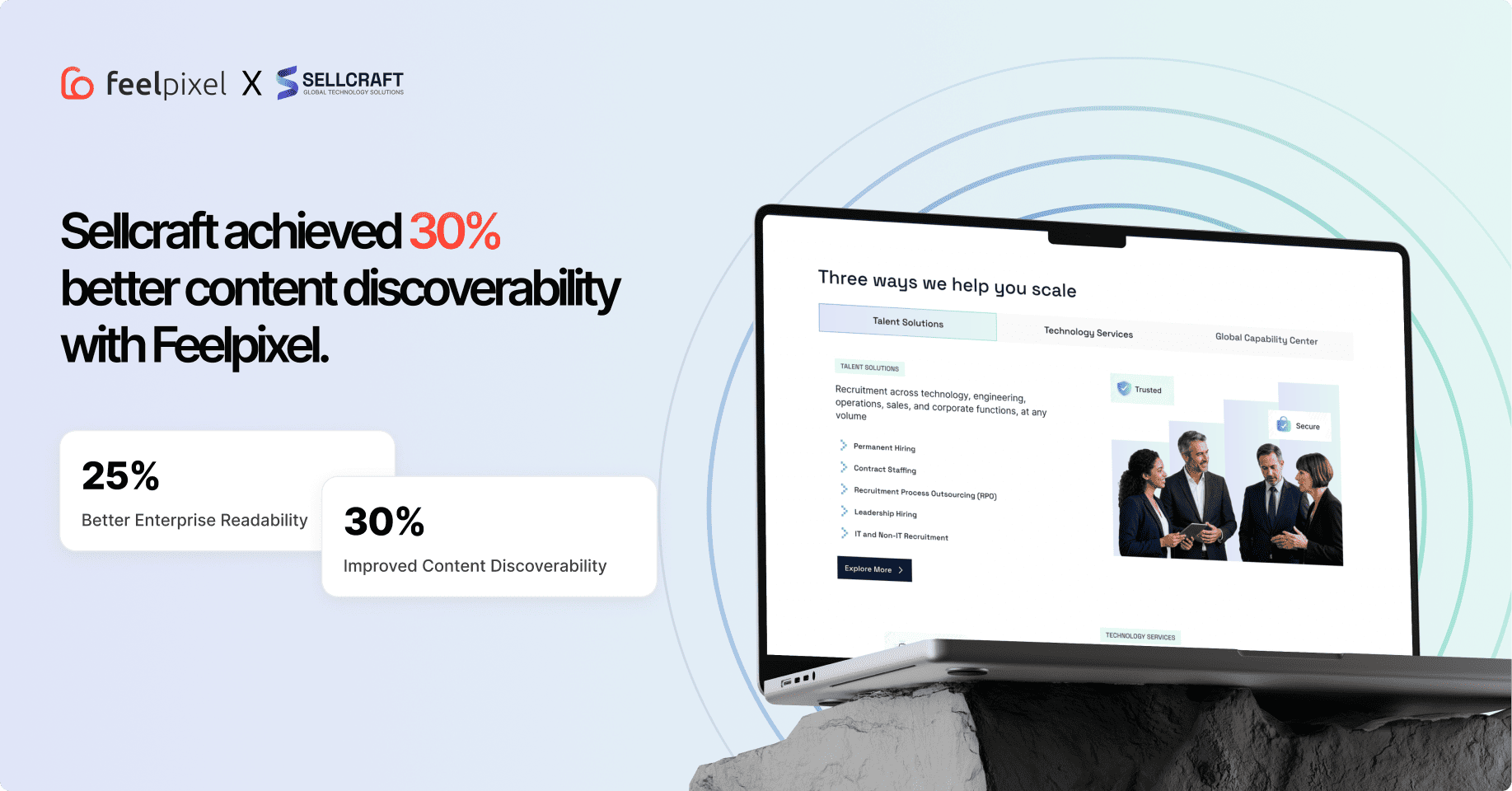
The new structure also gave us a foundation to build SEO, AEO and GEO into the website rather than treating them as post launch optimisation. We structured content around search intent and real user questions, strengthened the hierarchy through clear H1, H2 and H3 structures, and used FAQs and direct answers to make important information easier to find and understand. We also strengthened the technical layer through meta tags, canonical URLs, crawlable navigation, schema markup, FAQ Schema, XML sitemap, robots.txt and semantic HTML, while connecting Sellcraft’s services, expertise and supporting content through internal linking and clear entity relationships. The result was a website designed to communicate expertise clearly to people while making its content more accessible to search engines and AI based discovery systems.
We mapped primary, secondary, commercial, long tail and question based keywords to Sellcraft’s priority services and aligned them with relevant search intent. This created dedicated content opportunities for important services and established a clearer topical structure across the website.
We aligned each page with the intent behind relevant searches, using H1, H2 and H3 hierarchy, focused page content, concise sections, semantic relevance and internal linking. This helped search engines identify the primary topic of each page and understand its relationship with related services and content.
We identified questions potential clients may ask when researching Sellcraft’s services and structured the content around question led sections, direct answers and FAQs. FAQ Schema was implemented alongside the visible FAQ content, giving search systems structured information about these questions and answers and supporting AEO.
We organised Sellcraft’s expertise and service information into a more consistent content structure, supported by relevant service content and supporting resources. This helped establish clearer signals around Experience, Expertise, Authoritativeness and Trustworthiness (E-E-A-T) while building greater topical depth around Sellcraft’s areas of expertise.
We organised Sellcraft’s expertise and service information into a more consistent content structure, supported by relevant service content and supporting resources. This helped establish clearer signals around Experience, Expertise, Authoritativeness and Trustworthiness (E-E-A-T) while building greater topical depth around Sellcraft’s areas of expertise.
We created a scalable CMS structure that supports the continued development of topic clusters, blogs, case studies, FAQs and supporting service content. Internal linking connects these content areas, allowing new information to strengthen existing topics rather than creating disconnected pages.
Envision Displays had a broad portfolio of exhibition and portable display solutions, but visitors were finding it difficult to differentiate products, understand the right solution and move from browsing to enquiry. We redesigned the experience around product discovery and decision making, restructuring the information architecture around products, industries, solutions and use cases. By combining clearer product journeys with stronger content, trust signals and conversion points, the redesigned experience delivered 2.5x increase in enquiry submissions and 40% higher product page engagement.
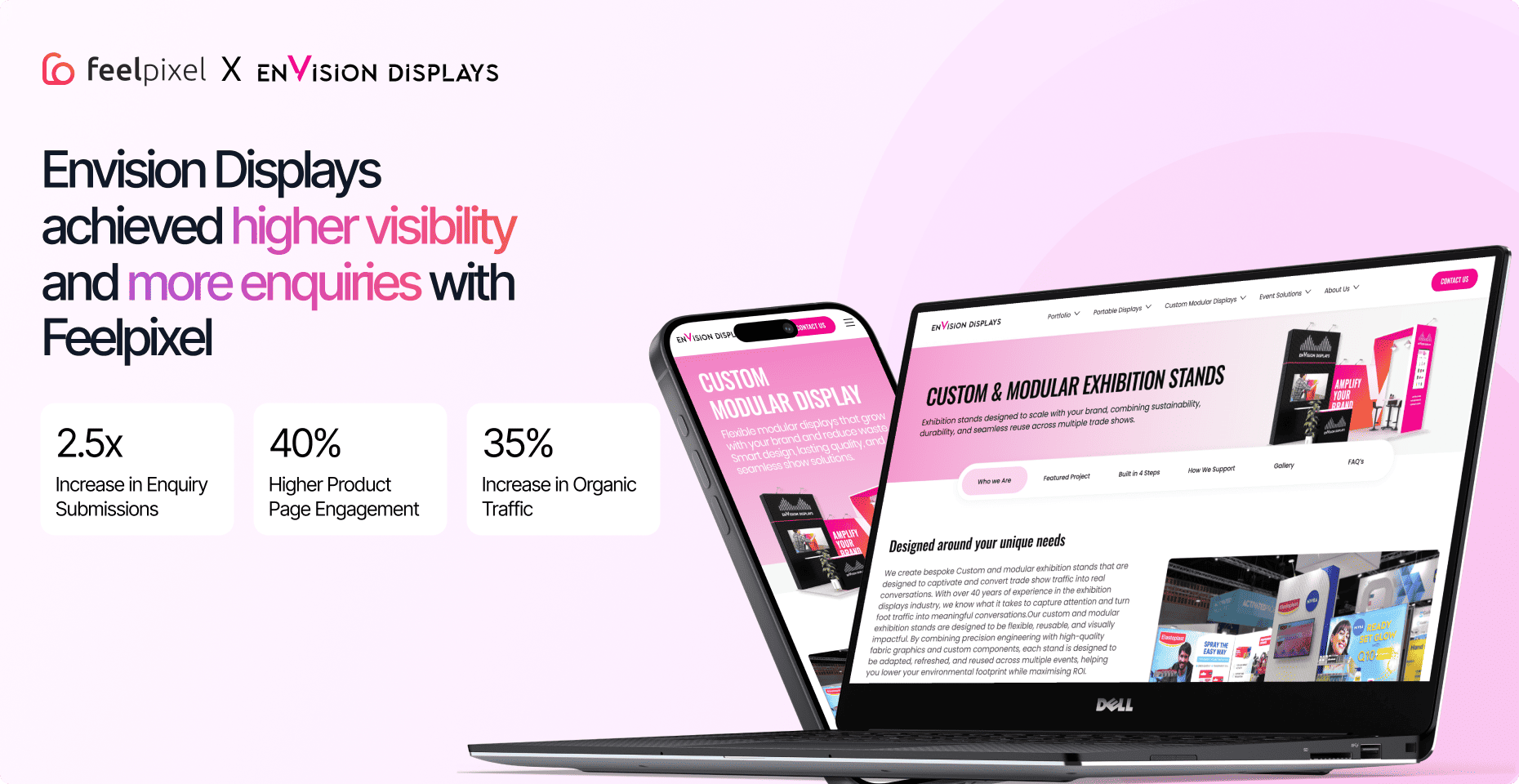
The new product structure also helped us build a stronger search strategy around Envision’s products. We mapped high intent, commercial, long tail and question based searches to relevant product, solution and industry pages, so each page had a clear search purpose. The goal was to help potential buyers find the right product through relevant searches and understand the information they needed before making an enquiry. Product specifications, applications, use cases and buying information were organised into focused sections with clear headings, internal links and direct answers to common questions. This made product information easier to discover through SEO and easier to use in answer based searches.
We used FAQ content and FAQ Schema to support AEO, while connecting products with their industries, solutions and use cases to give GEO and AI discovery more context. The goal was not simply to add more content, but to make the relationships between Envision’s products and expertise clearer to search engines and AI systems. Case studies and real world applications added supporting evidence, while the overall content structure kept important information clear, accessible and machine readable.
We reworked the information architecture, sitemap and page hierarchy around products, industries and solutions, giving each offering a clearer place within the website. This helped visitors move between related products and supporting information while strengthening the topical relationships that support search and AI discovery.
We structured Envision’s product pages around high intent searches and the information buyers need before choosing a display solution. Product descriptions, specifications and applications were organised into clear, topic focused sections with relevant H1 and H2 headings, direct answers and internal links aligned to search intent. We also introduced FAQ content with FAQ Schema to structure common product questions and answers, making key information clearer for search engines and more useful for AEO, while the relationships between products, applications and supporting content strengthened GEO and AI discovery.
We identified the questions users need answered before choosing a display solution and incorporated question based content, FAQs and direct answers into relevant pages. FAQ Schema was implemented alongside the visible FAQ content, creating a clearer structured representation of these answers.
We organised Envision’s content around the search intent and topics surrounding its display solutions, then developed supporting relationships between products, industries, solutions, use cases, blogs and case studies. Internal linking reinforced these topic relationships, while consistent terminology and structured content helped search engines and AI systems establish clearer context around Envision’s expertise and offerings.
We brought the content strategy into development through semantic HTML, crawlable navigation, structured content, metadata, relevant schema markup and a scalable CMS. This created a technical foundation that supports SEO while keeping important information accessible and machine readable for AI based discovery.
Yes. We consider SEO, AEO, GEO and LLM SEO throughout the website process, starting with business goals, search intent, information architecture and content planning. This allows search and AI discoverability to be considered alongside the website strategy, content, UX, UI and development rather than treated as a post launch activity.
Yes. We can audit a website across Technical SEO, On Page & Off Page SEO, and AEO & GEO to understand its current search and AI discoverability. The audit looks at technical foundations, content and search intent, authority signals, structured information, entity relationships and opportunities to strengthen the website’s discoverability.
Yes. These capabilities can be integrated into the website project based on the project’s size, goals and requirements. They can also be taken up as an additional service when a business wants to strengthen the search and AI discoverability of an existing website.
We bring together website strategy, information architecture, content structure, SEO, AEO, GEO, LLM SEO, UX, UI and development. This can include search intent and keyword mapping, page hierarchy, internal linking, metadata, schema markup, crawlable navigation, technical foundations, question led content and machine readable content.
Our approach focuses on making the business, its expertise and its information easier for AI systems to understand. We create clear relationships between services, products, industries, use cases and supporting content, while strengthening content with useful information, relevant context, credible sources and structured information. The aim is to create a website that is clear and accessible across evolving search and AI discovery experiences.
We begin by understanding the business, its goals, offerings, audiences, priority services and competitive landscape. Existing website access, analytics, search data, brand information, business expertise and relevant content can help us build a stronger understanding of the current situation. From there, we define the research, audit, content and technical requirements needed for the project.
 Sellcraft
 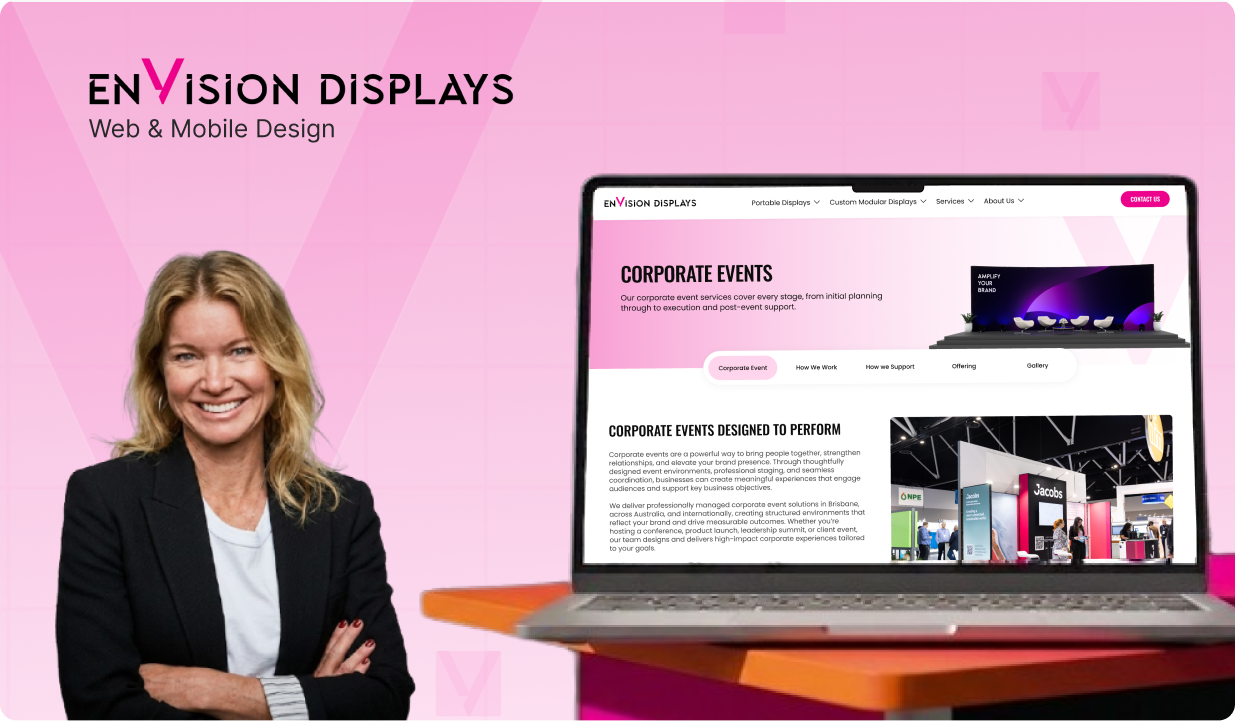 Envision Displays
  Class Central
  Cyber SecurityRisk Profiler